



Smart Wool: Turning Tech Into Profit for WA Woolgrowers
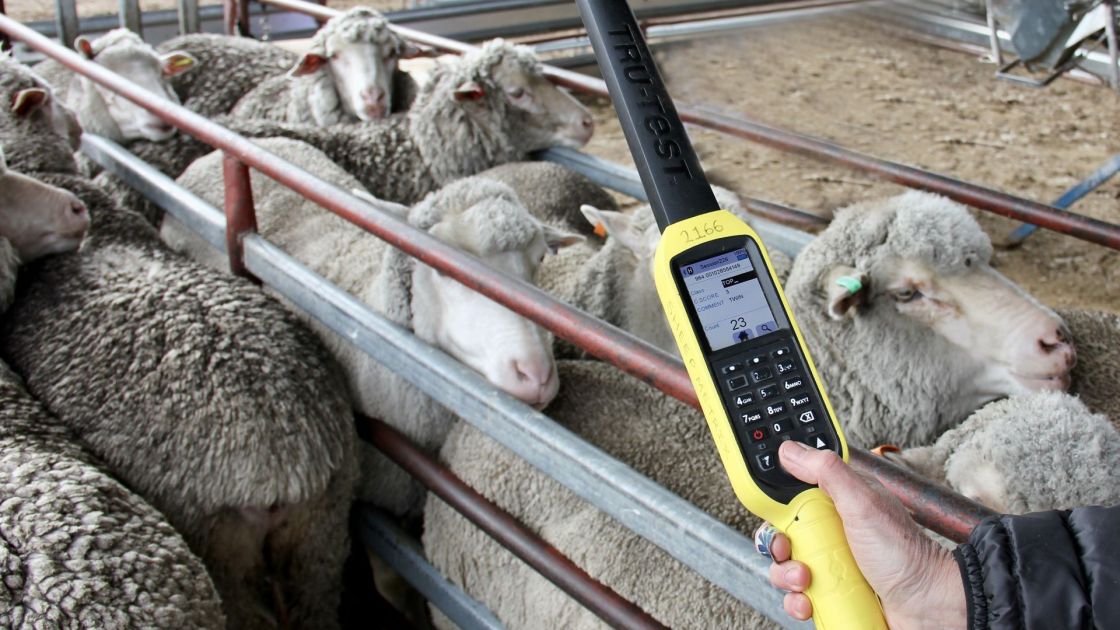
Want to get more from tech without wasting money or time? In this article, Mark Ferguson shares how woolgrowers can turn tech into real profit—starting with the basics like pregnancy scanning and condition scoring. From capturing EID data at marking to applying the 80/20 rule on tech investments, it’s packed with practical, low-cost strategies to lift productivity.
Woolgrowers are operating in an era where chasing 1-2% productivity improvements is essential to stay ahead of inflation and keep improving productivity. But how do you actually turn farm data and technology into a better bottom line without getting lost in all the noise?
In a recent episode of the AWI Extension WA Deep Dive series, Mark Ferguson, CEO of neXtgen Agri, unpacked exactly how woolgrowers can make smarter, more profitable decisions using on-farm technology and data. You can listen to the 30-minute episode here. This article summarises the key takeaways.
The "Boring" but Brilliant Basics
According to Mark, the biggest opportunity for data-driven profit isn't necessarily a flashy new gadget, but mastering the fundamentals. "This is going to sound really boring but I think the two fundamental things that we need in our industry is people pregnancy scanning for multiples and condition scoring their animals," Mark explains. While it sounds like a broken record, getting this core information right sets you on a path to knowing significantly more about your animals and making better decisions. Mark goes on to say that “utilisation (of this information) in industry is probably less than 10%, there are not that many people doing it."
Mark also makes a powerful point that woolgrowers shouldn't settle for being part of the majority that isn't doing these basic yet important things. "I think a lot of us find comfort in the fact that if I say 40% of people scan for multiples and the 60% who don't go 'it's all good, I'm like the majority.' That's not good enough. We need an industry that is thirsty and wants to be better to survive."
Capitalise on Mandatory EIDs Early
With EID tags now mandatory for newborn lambs in WA, Mark urges woolgrowers to start collecting data immediately. Crucially, woolgrowers need to record whether a lamb is born a single or twin against their EID tag in the lamb marking cradle. If you wait until weaning and miss this early window, mobs get boxed together and "you miss out on that data forever," leaving you guessing for the rest of the animal's career.
Simply put, without knowing a lamb's birth type or the ewe's age, you can actually make worse breeding decisions when selecting for fleece weight and micron, because you might preferentially select single-born lambs out of older ewes simply due to their better early environment.
Tech Adoption: Start Small and Try Before You Buy
When it comes to investing in tech, it's easy to get distracted by expensive, top-of-the-line setups seen at field days. Mark advises starting with your core business problem rather than simply buying what your neighbour has or what you hear on a podcast. He strongly advocates starting small, noting that the 80/20 rule applies: 20% of the gear will often deliver 80% of the benefit.
"I've seen lots of fancy bits of kit gathering dust in the corner of sheds," Mark warns. Instead of buying a $30,000 auto-drafter right away, a basic manual weigh-scale and an EID reader that can record traits against a tag will get you 90% of the way there.
Mark also recommends being the "second mouse at the trap" by trying out equipment before purchasing. He suggests offering a half-day of free labour to a neighbour who already owns the gear to see how it operates in practice before committing your own funds.
Overcoming the Data Bottleneck
Collecting data is completely useless if you don't do anything with it. If handling data and spreadsheets feels like a major chore, Mark suggests either upskilling with YouTube tutorials and artificial intelligence (AI) tools like ChatGPT or simply outsourcing the work to someone who likes analysing data, such as a service provider.
"If it's not something that you have the skill set or you can't find it within your business, then be willing to grab someone else who can do it a lot more efficiently," Mark advises. There are plenty of service providers and "data geeks" who enjoy crunching the numbers and can deliver insights when you need them.
Precision Sheep Management in WA
Mark also flagged that WA woolgrowers now have the opportunity to get involved in—and learn from—the Precision Sheep Management (PSM) project, helping validate how to turn data and technology into real on-farm value. Led by Meat & Livestock Australia and Australian Wool Innovation, the project is designed to help producers unlock the potential of precision sheep management to drive productivity and profitability. The project is supported by the Davies Livestock Research Centre (University of Adelaide), Murdoch University, neXtgen agri and DPIRD WA.
The project is based on the belief that animals within a mob respond differently to management and identifying these differences—like pulling out shy feeders—can make farmers more money. Woolgrowers can visit the Precision Sheep HQ website to participate in training modules, or volunteer as research and demonstration sites right here in WA to see the impacts of management changes firsthand.
The Future: AI and Camera Technology
Looking ahead, Mark sees a future driven by AI and camera technology that will automatically match lambs to dams, monitor sheep welfare and spot early signs of flystrike or changes in pasture availability. Through his tech company GeneSmith, AI-driven cameras are already undergoing commercial trials on farms to match ewes to their lambs. Ultimately, this promises a future with a lot more data-enabled decisions, but where the heavy lifting and data analysis is already solved by AI before it even reaches the farmer. As Mark explains, "I think it's pretty exciting where we'll go... a lot more data-enabled decisions, but not a lot more data coming to you. It's more that decision already solved through things like AI that's analysing multitudes of data that we individually as humans couldn't actually get our heads around."
Despite recent challenges in the wool industry, Mark remains highly optimistic about the untapped potential of these innovations, urging woolgrowers to embrace the changes: "I think we need true belief that this is a great industry and that technology is going to take us to be even better... we've got massive opportunities ahead of us. We haven't reached peak use of the science."
Key takeaways for WA woolgrowers
Mark's advice to get the most out of tech and data:
- Start with a clear objective: Identify the most important thing you want to change in your production system before investing in any piece of technology.
- Capture EID data at marking: Record a lamb's birth type (single or twin) against its EID tag at lamb marking, before mobs get boxed up and the data is lost forever.
- Embrace the 80/20 rule: You don't need a massive upfront investment; basic gear like an EID reader and manual weigh scales will deliver 80% to 90% of the benefits.
- Try before you buy: Be the "second mouse at the trap" by testing equipment on a neighbour's farm—offer half a day of labour to see how the tech actually works before spending your money.
- Outsource the data crunching: If data analysis and Excel spreadsheets aren't your strong suit, find a service provider or an enthusiastic "data geek" to process the information for you so it actually drives profitable decisions.
To check out the sources used for the article and for more information, read the following:
- Deep Dive Series, Episode 1: Smart Wool Turning Tech into Profit - AWI Extension WA
- Precision Sheep HQ - MLA, AWI
- AI chatbots offer simple streamlining tool article - AWI
Georgia Pugh, AWI Extension WA

.jpg/Zz0zMzhkZjFlYTU3YTUxMWYwYWMyMDUyZTc5YjU1NzQyMA==)